
7 Early Signs of Damp in Your Home You Should Never Ignore
Damp is one of the most common problems affecting homes across Essex, yet it’s often overlooked until significant damage has already occurred. What starts as a small patch of discolouration or a musty smell can eventually lead to damaged plaster, timber decay, mould growth and expensive structural repairs.
Knowing what to look for can help you identify damp early and arrange the right treatment before the problem becomes more serious.
1. Musty Smells That Won’t Go Away
One of the earliest warning signs is a persistent damp or earthy smell, particularly in rooms with limited ventilation. This odour is usually caused by excess moisture allowing mould or fungal spores to develop behind walls, beneath flooring or inside roof spaces.
If the smell remains even after cleaning and airing the room, it’s worth having the property inspected. (Damp in Your Home)
2. Peeling Wallpaper or Bubbling Paint
When moisture enters internal walls, decorative finishes often begin to fail. Wallpaper may peel away from the wall, paint can bubble or blister, and plaster may start to soften.
Although these issues are sometimes blamed on poor decorating, they are frequently symptoms of an underlying moisture problem.
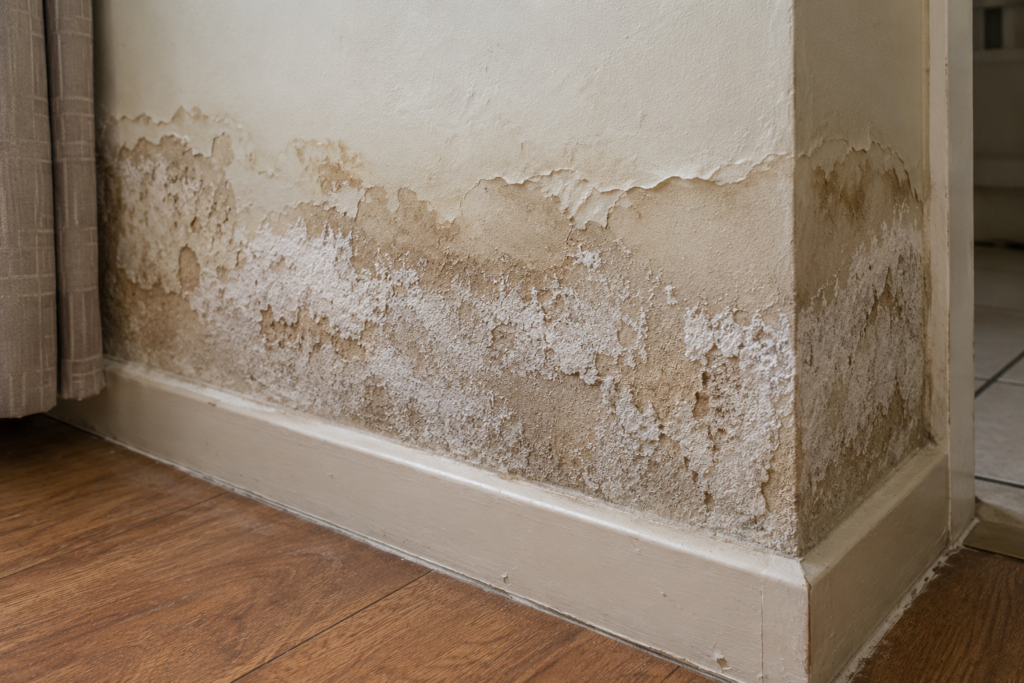
3. Tide Marks on Internal Walls
Brown or yellow staining near floor level is a classic indicator of rising damp. As groundwater travels through masonry, it carries salts that remain behind when the moisture evaporates, leaving visible tide marks. (Damp in Your Home)
These stains should never be ignored, as they often indicate that the damp proof course has failed or been bridged.
4. White Powder Deposits
If you notice a white, chalky substance on brickwork or plaster, this is likely to be salt deposits left behind by evaporating moisture.
These salts continue to attract moisture from the air, making walls difficult to dry out without addressing the underlying cause.
5. Mould Around Windows and Corners
Black mould commonly develops where condensation collects on colder surfaces. Bathrooms, kitchens and bedrooms are particularly vulnerable where ventilation is poor.
While mould can sometimes be cleaned away, it will usually return unless the source of excess moisture is properly managed.
6. Rotten Skirting Boards or Timber
Timber absorbs moisture over time, making it vulnerable to wet rot, dry rot and wood-boring insects. Soft skirting boards, crumbling floorboards or windows that become difficult to open may all indicate excessive moisture levels.
The sooner timber problems are identified, the easier and less costly they are to repair. (Damp in Your Home)
7. Cold or Damp Walls
Walls that feel noticeably colder than surrounding areas may be retaining moisture. Damp walls lose their insulating properties and can make your home feel colder while increasing heating costs.
Professional moisture testing can determine whether the problem is caused by rising damp, penetrating damp or condensation. (Damp in Your Home)
Not Every Damp Problem Has the Same Cause
Many homeowners assume all damp is the same, but there are several different types, including:
- Rising damp
- Penetrating damp
- Condensation
- Leaking plumbing
- Defective rendering
- Poor ventilation
Each requires a different solution. Treating the symptoms without identifying the cause often results in the problem returning.
Why Professional Diagnosis Matters
Modern damp meters provide useful information, but they don’t tell the whole story. An experienced surveyor will inspect both the inside and outside of your property, assess ventilation, check moisture levels and identify the true source of the problem before recommending any treatment.
Accurate diagnosis prevents unnecessary work and helps ensure repairs are effective for the long term. (Damp in Your Home)
Protect Your Home Before the Damage Spreads
Ignoring damp rarely makes it disappear. Small problems can quickly develop into damaged plaster, fungal decay, mould growth and costly structural repairs if left untreated.
If you’ve noticed any of these warning signs, arranging a professional damp survey can help identify the cause and provide the right solution before more extensive repairs become necessary.
Sterling Timber & Damp has been helping homeowners across Essex protect their properties for decades, providing expert advice and effective treatments for rising damp, condensation, timber decay, woodworm and rendering issues. (Damp in Your Home)